

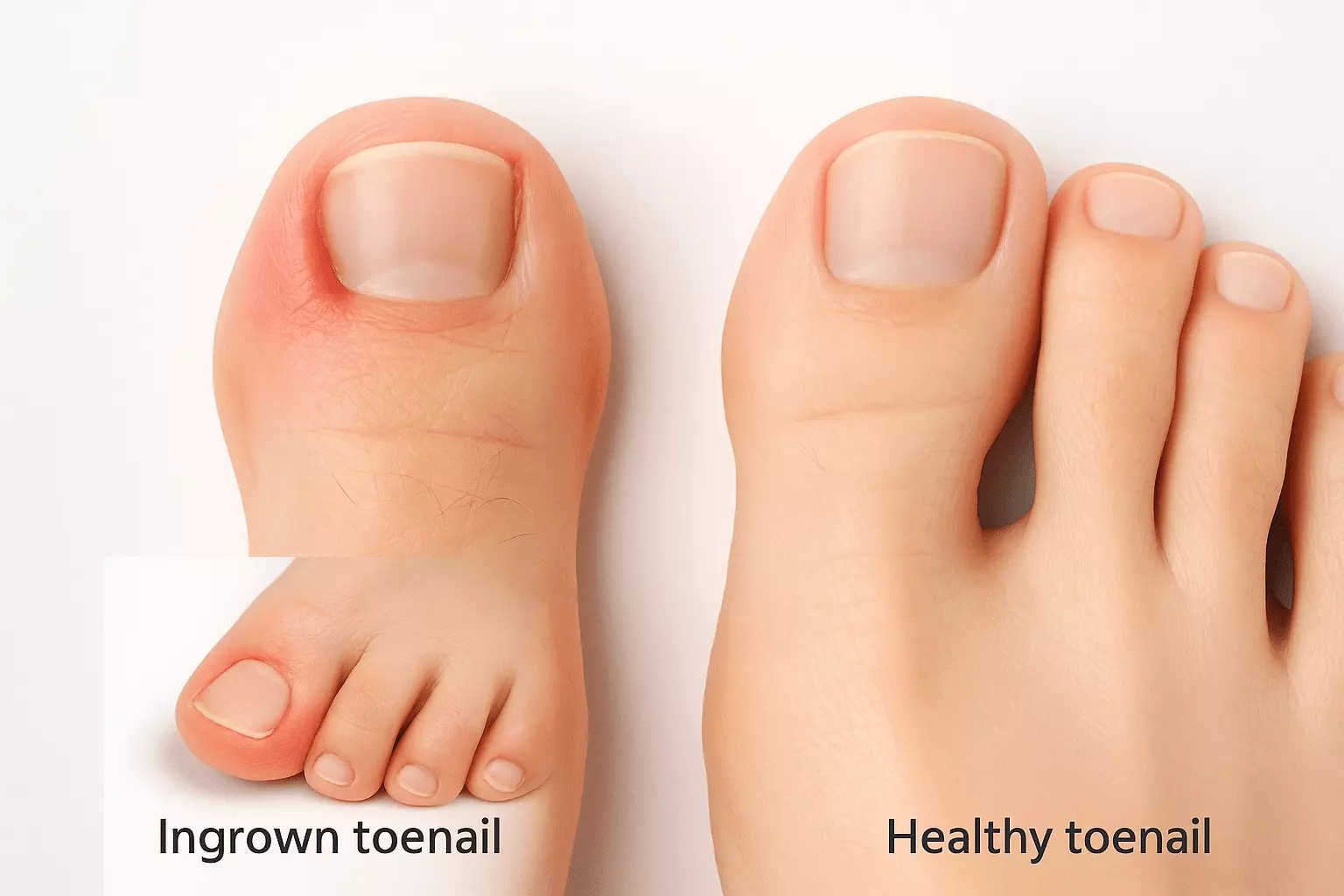
Winter activities increase pressure, moisture, and friction on the toes. Because these conditions add stress to the nail edges, the risk of ingrown toenails rises. Patients benefit from taking preventive steps; trimming nails straight across, choosing properly fitted footwear, and keeping feet dry during cold-weather activities help reduce the risk of developing this condition. Here is more information on what ingrown toenails are, what causes them, why winter makes them more likely, and how patients can prevent them:
What Are Ingrown Toenails?
An ingrown toenail occurs when the edge or corner of a nail grows into the surrounding skin instead of over it. Any toenail can become ingrown, but the big toe is the most common site. Early signs include tenderness, redness, and mild swelling along one side of the nail. If the condition is left untreated, the area can become infected, causing pus, warmth, and increased pain. Some patients develop recurring ingrown toenails because of nail shape or genetics; others develop the condition after a single injury.
What Causes Them?
Several factors contribute to ingrown toenails, most of which relate to pressure or improper nail care. Common causes include:
- Cutting nails too short or rounding the edges instead of trimming straight across
- Wearing shoes that press the toes together or compress the nail bed
- Repeated trauma to the toe, such as stubbing it or dropping an object on it
How Does Winter Affect Them?
Winter activities change how feet are treated on a daily basis. Several seasonal factors increase ingrown toenail risk, and boots are among them. Boots are often stiffer and tighter than regular footwear, which adds pressure that pushes the nail into the surrounding skin during activities like skiing, snowboarding, or walking through snow. Thick winter socks are needed for warmth, but they can also compress toes when layered under snug boots.
Moisture presents a separate problem. Sweat builds up inside boots during physical activity, and snow or slush can seep in and keep feet damp for long periods. Damp skin softens and becomes more vulnerable to nail penetration, which raises infection risk if an ingrown toenail develops. Reduced air circulation in winter footwear worsens the problem, creating a longer window for issues to develop than in warmer months.
How Are They Prevented?
Preventing ingrown toenails in winter starts with proper trimming; cut nails straight across rather than curved. Their length should extend slightly beyond the toe. They should not be so long that they catch on socks or boot linings. Patients benefit from avoiding tearing or picking at nails, as this can leave jagged edges that grow into the skin.
Footwear choice matters. Boots and shoes should be wide enough to fit the toes without pressure, even with thicker socks. Trying boots on with winter socks before purchasing can help confirm proper fit, and change moisture-wicking socks when damp. Patients should also take breaks during long days of winter sports, since airing out the feet and checking for early signs of irritation allows problems to be caught before they worsen. A podiatrist can offer additional prevention tips.
Consult a Podiatrist
Ingrown toenails are common, but they can be prevented with professional guidance. Proper trimming, well-fitted footwear, and moisture control address most risk factors introduced by cold weather. Patients who notice redness, swelling, or pain along a toenail should seek care promptly, since early treatment helps prevent infection and reduce discomfort. See a podiatrist today.