

Shoulder pain affects how you lift, reach, sleep, and dress, and people take various approaches to controlling it. Some cases stem from overuse, and others follow an injury or arthritis. Since the shoulder relies on many muscles, tendons, and ligaments, pain typically has more than one source. Here are four shoulder pain treatment approaches and what each one involves:
Physical Therapy
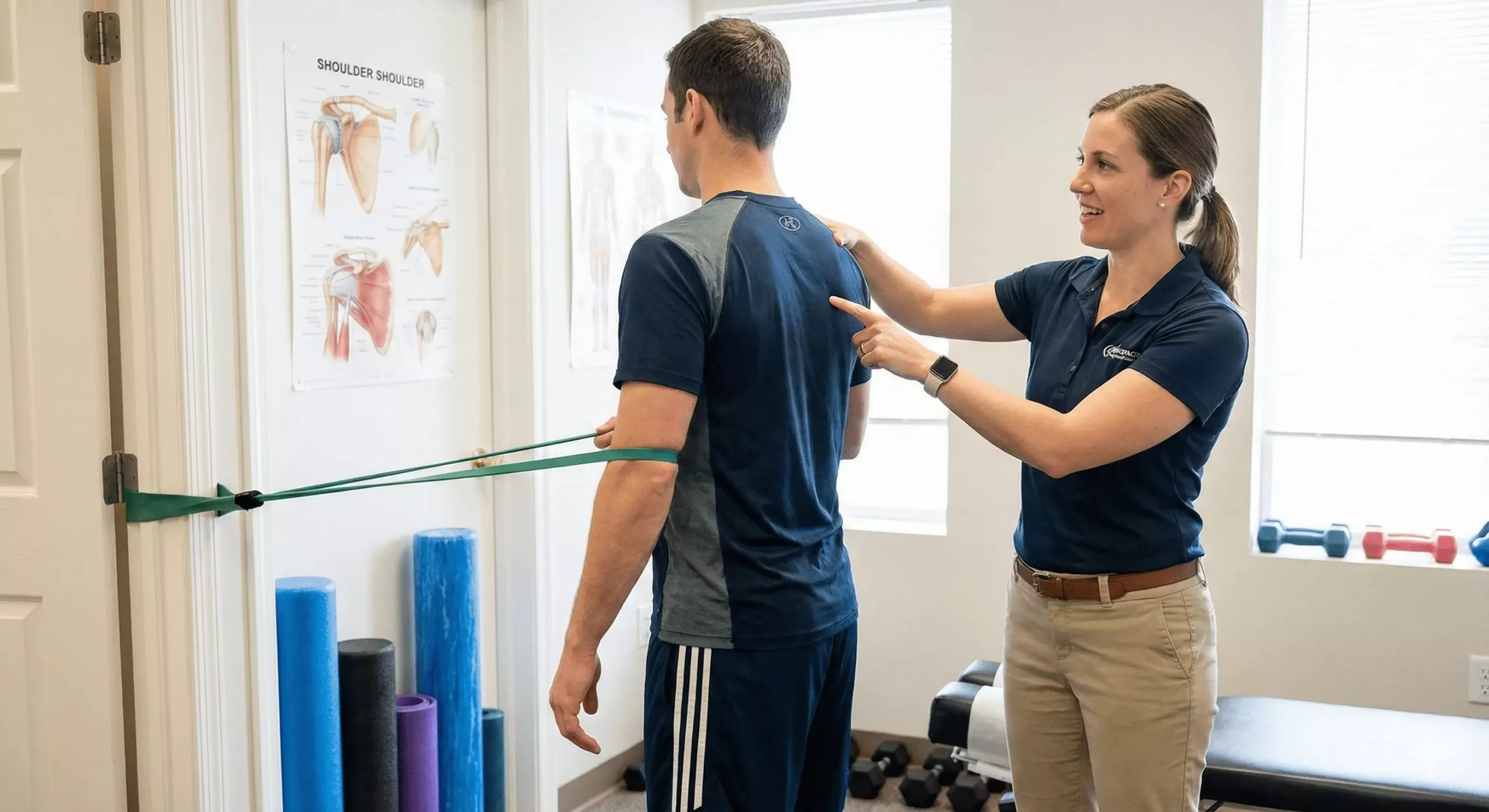
When shoulder pain limits your movement, a physical therapist may begin with a hands-on evaluation. The therapist tests your strength, flexibility, and range of motion. These findings shape your exercise plan, and the plan changes as your shoulder responds. Your therapist may also use heat, ice, or regenerative therapies for shoulder pain treatment. A typical program includes:
- Rotator cuff strengthening with resistance bands
- Stretches for the chest and upper back
- Posture training for desk work and phone use
- Therapy to loosen stiff joints
Prescription Medications
Doctors prescribe medication to manage pain and inflammation. If over-the-counter options fall short, your provider may recommend a stronger anti-inflammatory drug. Prescription NSAIDs reduce swelling, but they carry risks for your stomach and kidneys. Take them with food and follow the dosing schedule exactly.
Corticosteroid injections deliver medicine directly into the joint, and the effects typically last several weeks to a few months. Most providers limit these shots to a few per year. Frequent injections may weaken tendons, which is why doctors space them out.
While muscle relaxants ease spasms, they can cause drowsiness. Your doctor reviews your health history, and they check for drug interactions. Share every supplement and medication you take.
Surgical Corrections
Surgeons rarely start with surgery, and most recommend it after conservative care stops helping. Typical reasons include a torn rotator cuff, repeated dislocations, or severe arthritis. If imaging shows a full tendon tear, a surgeon may suggest repair. Your surgeon reviews MRI results before recommending a procedure.
Arthroscopy uses a small camera and tiny instruments. Recovery from arthroscopic repair typically takes months, and you’ll wear a sling for several weeks. Joint replacement involves a longer recovery because the surgeon replaces damaged bone with implants. Physical therapy follows shoulder surgery.
Platelet-rich Plasma
Platelet-rich plasma (PRP) uses a concentrated portion of your own blood. After a provider draws a small blood sample, a centrifuge separates the platelets from other components. The provider then injects the platelet-rich layer into the injured area, and ultrasound guides the needle. Typical PRP targets in the shoulder include:
- Rotator cuff tendinopathy
- Partial tendon tears
- Shoulder bursitis
- Early arthritis
Research on PRP for shoulder conditions is still growing, and results vary from person to person. Many patients receive multiple sessions. Since PRP uses your own blood, allergic reactions are typically not an issue. Expect mild soreness at the injection site for a few days.
Schedule Shoulder Pain Treatment
If shoulder pain lasts more than a few weeks, schedule an evaluation with a qualified provider. Bring notes about your symptoms, past injuries, and current medications. Your provider reviews your history and imaging, and together you choose a treatment plan. Each approach has trade-offs, so ask about recovery time, cost, and risks.