

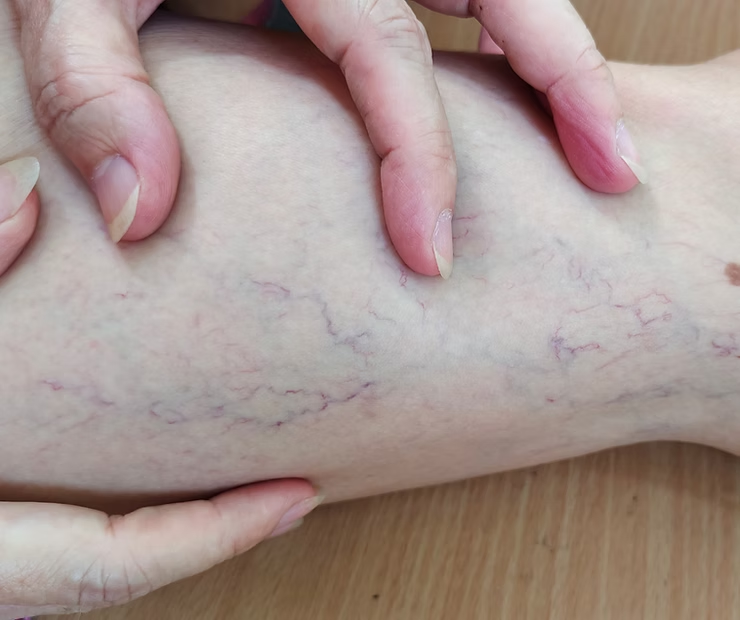
Spider veins are a common vascular condition, and they can affect quality of life. While they are generally harmless, they may cause discomfort in some patients. Here is more information on what spider veins are, their causes, symptoms, and how they are managed:
What Are Spider Veins?
Spider veins are small, dilated blood vessels that appear close to the skin’s surface, typically presenting as red, blue, or purple web-like patterns on the legs, thighs, and face. These clusters of tiny veins get their name from their resemblance to a spider’s web. Unlike varicose veins, spider veins are flat, and they do not bulge above the skin’s surface.
What Causes Them?
This condition develops when small blood vessels weaken or are under increased pressure, causing them to dilate and become visible through the skin. Several factors contribute to this process, including genetics, hormonal changes, prolonged standing or sitting, and sun exposure. Pregnancy and aging are also contributors; both place added strain on the vascular system over time.
Certain lifestyle and occupational factors may accelerate their development, and a healthcare professional will assess these factors during an evaluation. People who stand for long periods face a higher risk due to the continuous pressure placed on leg veins. Weight gain similarly increases vascular pressure, making spider veins more likely to form.
What Are the Symptoms?
Some people experience no symptoms beyond their visible appearance. Others may notice mild discomfort, such as aching, burning, or itching around the affected area, which reduces quality of life. Swelling in the legs and ankles can also occur in more pronounced cases, but lifestyle changes help patients find relief.
Symptoms are typically mild, and they do not indicate a serious medical condition. Symptoms that worsen over time or are accompanied by significant swelling and pain may warrant a clinical evaluation. A healthcare provider will assess whether the symptoms are linked to a broader venous insufficiency issue, enabling comprehensive treatment.
How Are They Managed?
Several treatment and management options are available, ranging from lifestyle adjustments to medical procedures. The most appropriate approach depends on the severity of the condition, the patient’s overall health, and their treatment goals. Lifestyle modifications include:
- Regular physical activity, such as walking, to promote healthy circulation
- Leg elevation during rest periods to reduce venous pressure
- Compression stockings, which apply gentle pressure to the legs and support blood flow back toward the heart
- Weight management to reduce the physical load placed on the vascular system
- Sun protection for veins on the face, using broad-spectrum sunscreen
Medical treatments are available for patients seeking more direct intervention. Sclerotherapy involves injecting a solution directly into the affected vein, causing it to collapse and fade over time. Laser therapy is another option that uses focused light energy to reduce the appearance of spider veins without needles or incisions. Both procedures require minimal recovery time. The choice between these treatments depends on the size and location of the veins, as well as the patient’s medical history.
Consult a Specialist
Spider veins are a manageable vascular condition with multiple effective treatment options, and understanding the underlying causes and associated symptoms allows patients to take a proactive approach to their venous health. If you are experiencing symptoms, consult a specialist. A doctor can evaluate your condition, confirm a diagnosis, and recommend a treatment plan suited to your individual health needs.