

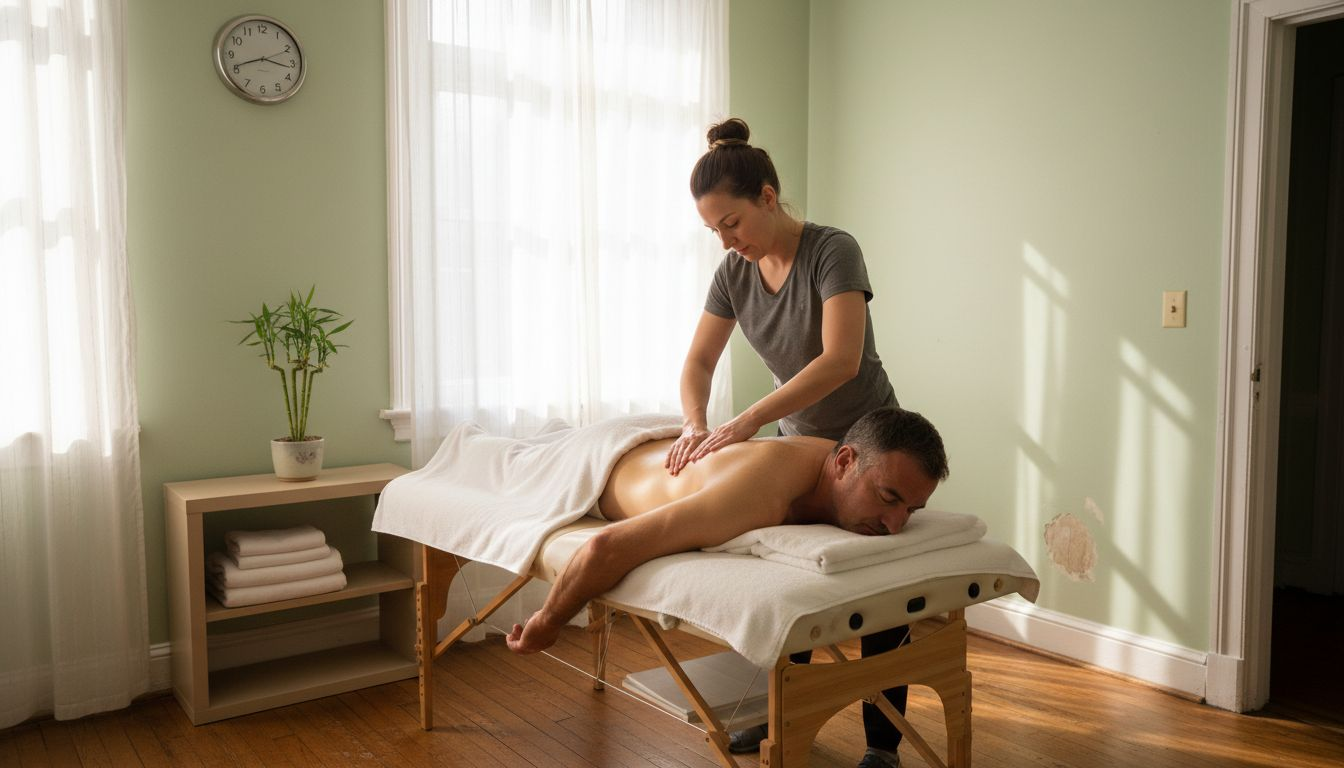
Your choice of massage style affects the results you receive and your overall experience. Whether you want targeted tension relief or deep relaxation, there is a treatment suited to your physical needs. Each technique uses a specialized method; you can choose one that focuses on muscle recovery, flexibility, or overall well-being. Here are several different styles of massage and their potential benefits:
Swedish Massage
Swedish massage provides a balanced treatment for calming the nervous system and promoting general wellness. Ituses gentle pressure and flowing strokes, which help encourage relaxation throughout the body. This option can be selected when you want a lighter treatment that supports overall wellness. Full-body techniques allow your therapist to treat multiple muscle groups in a single session. Flowing strokes help improve circulation while encouraging muscles to relax during the treatment; this approach suits first-time therapy clients and those seeking a lighter technique.
Your therapist can adjust the pressure to suit your comfort level during the session. This allows you to receive a customized experience based on your relaxation goals and physical needs. Additional benefits of choosing the Swedish technique may include:
- Better sleep quality
- Improved mental clarity
- Reduced muscle tension and stiffness
Sports Massage
Sports massage focuses on muscles affected by movement, and it can support active individuals before or after physical activity. The treatment also targets areas that experience repeated strain during exercise or training. Your therapist adapts techniques according to your activity level and recovery goals. Flexibility support also becomes part of the treatment through controlled muscle work.
Deep Tissue Massage
Deep tissue massage targets deeper muscle layers using slow movements and firm pressure. This technique can address long-standing muscle tightness and restricted movement. Your therapist works gradually across affected muscle groups to reach deeper tissues, and treatment pressure is adjusted according to your physical condition. The following points help explain how deep tissue massage supports muscle recovery:
- Deep muscle layers: Targets muscles beneath the surface through controlled pressure.
- Chronic tension: Focuses on areas affected by ongoing muscle tightness.
- Slow pressure: Uses steady movements to work through deeper tissues
- Muscle recovery: Supports recovery after repetitive physical activity.
- Mobility improvement: Helps improve movement by addressing muscle restrictions.
Ashiatsu and Thai Stretching
Specialized massage techniques provide different approaches for addressing muscle tension and mobility concerns. Ashiatsu massage applies broad pressure using the therapist’s feet while overhead bars provide stability and support. Thai stretch massage incorporates assisted stretching and body positioning to help improve flexibility.
Ashiatsu uses controlled pressure to target larger muscle groups, and it can apply lighter pressure to smaller areas when needed. Because Thai stretch massage combines traditional techniques with assisted stretching, it helps improve flexibility and range of motion. Your therapist is able to assess your mobility goals and tailor the treatment to your individual needs and physical condition.
Complementary Therapies
Complementary therapies can enhance and prolong the effects of your primary treatment by addressing additional areas of the body. Reflexology involves applying pressure to specific points on the feet that correspond with different areas of the body. Gua Sha therapy uses smooth tools over targeted muscles, and it can complement soft tissue treatments.
A Moroccan body scrub exfoliates the skin and prepares it for additional spa services. Fire and ice therapy alternates heat and cooling techniques to support post-exercise recovery. Depending on your treatment goals, cupping therapy may also be applied to specific muscle groups.
A complementary therapy is a service that is combined with a primary treatment to support overall wellness. Because each person has different physical needs and preferences, your therapist can recommend options that align with your goals. These additional treatments provide a customized approach to your wellness routine.
Choose the Right Massage
Selecting the right massage style begins with understanding your treatment goals and physical condition. Since different techniques provide benefits ranging from relaxation to muscle recovery and improved mobility, choosing the right option can support your overall wellness. Personalized treatments allow your therapist to adjust each session according to your needs; this provides a more targeted approach to your care. Contact a professional spa to learn more about their offerings.