

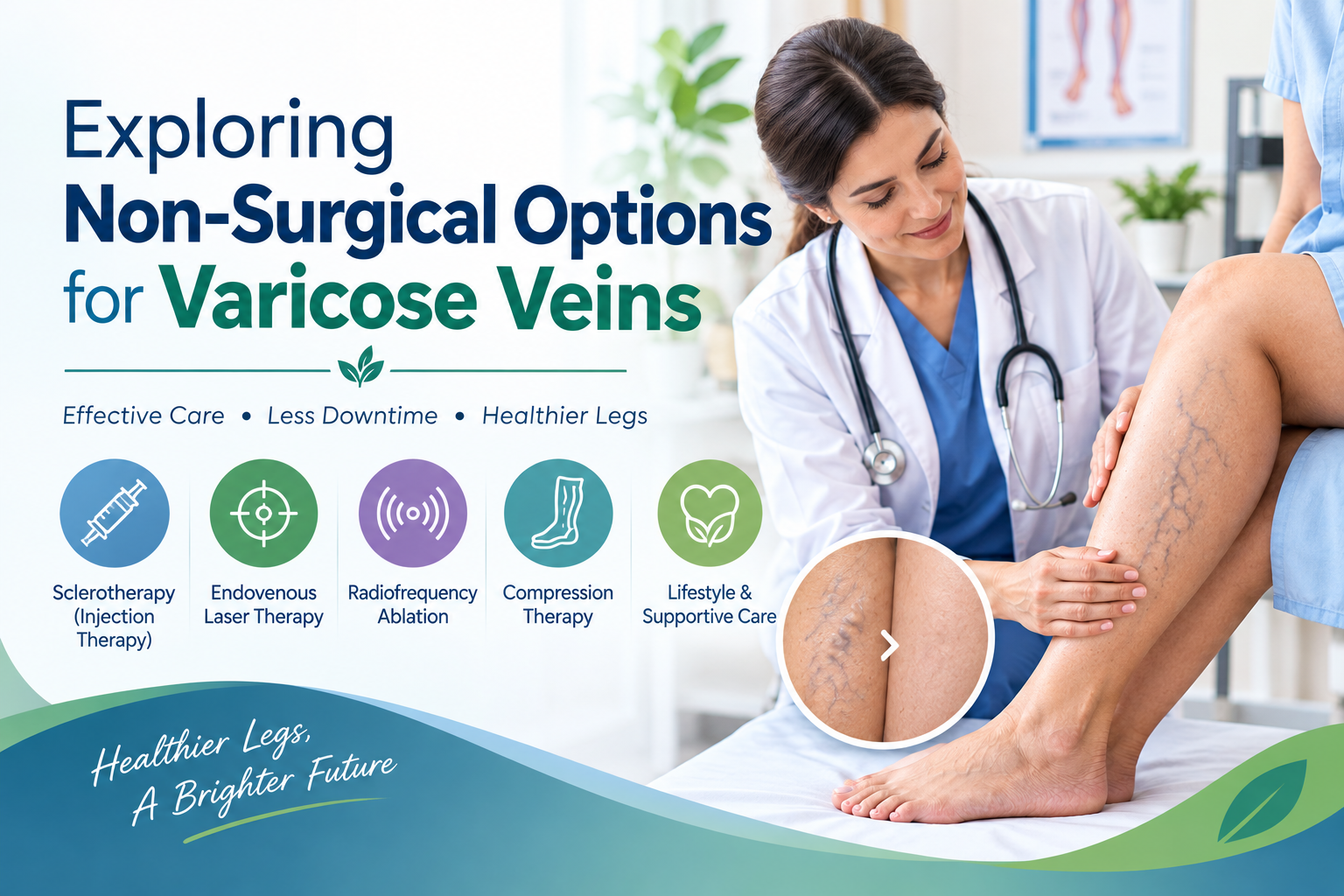
Varicose veins are large, swollen, twisting veins, most often found in the legs. They can cause aching, itching, and burning, and they sometimes lead to skin ulcers, bleeding, or blood clots. You have treatment options beyond surgery. When you know how each option works, you ask better questions, and your provider can plan your care.
Sclerotherapy for Smaller Veins
Sclerotherapy is a common treatment for smaller varicose veins and spider veins that works by sealing off the affected vein so your body can gradually absorb it.
How It Works
A provider injects a solution called a sclerosant directly into the affected vein. This solution irritates the vein lining, making the walls stick together and seal shut. Once sealed, blood can’t flow through that vein, so your body redirects circulation to nearby healthy veins. The treated vein starts by fading, and it eventually disappears.
What to Expect
Each session usually takes less than an hour, and most people tolerate it well. Some veins may need more than one session, and results develop over several weeks. You may notice mild bruising, redness, or small raised areas near the injection sites. These usually resolve on their own. Your provider may suggest wearing compression stockings briefly to help the vein walls stay sealed.
Varithena® for Larger Veins
Once your provider closes the vein, your blood reroutes through healthier veins nearby. Only a small foam volume is needed, and the provider controls the amount based on your vein size and length. The procedure does not require incisions or general anesthesia. You will lie down during the procedure, and your provider monitors the foam with ultrasound in real time. After the injection, gentle pressure is applied, and you will typically walk within minutes of finishing. You may need to wear compression stockings for a short period after treatment. Your provider will tell you exactly how long. Avoid prolonged sitting or standing in the days after your visit, and keep the treated leg elevated when resting. Your provider will schedule a follow-up to check the vein, confirm closure, and assess whether further treatment is needed.
VenaSeal® for Adhesive Closure
A provider places a thin catheter into the affected vein, and it delivers adhesive at precise intervals along its length. Ultrasound guides each step, and the provider confirms closure before removing the catheter. Once the treated vein closes, blood reroutes to healthy veins, and your body gradually absorbs the sealed vein over time. The adhesive stays in place within the vein wall. Here is what that means for you:
- Fast results: The vein closes during the procedure itself, and your provider can confirm the result with ultrasound before you leave.
- One small entry point: Only one access point is needed, so there is no significant wound to care for afterward.
- Comfort during placement: The catheter is thin, and most patients report little to no pain.
- Single visit: The session is typically completed within one office visit.
Schedule a Varicose Veins Consultation
Varicose veins should be treated promptly. Each option works differently, and the right choice depends on vein size, location, and your health history. Before treatment, a provider evaluates your veins, and together you review which option fits your needs. Bring a list of your symptoms and medications to the visit. Prepare questions about recovery, and write down the answers.