

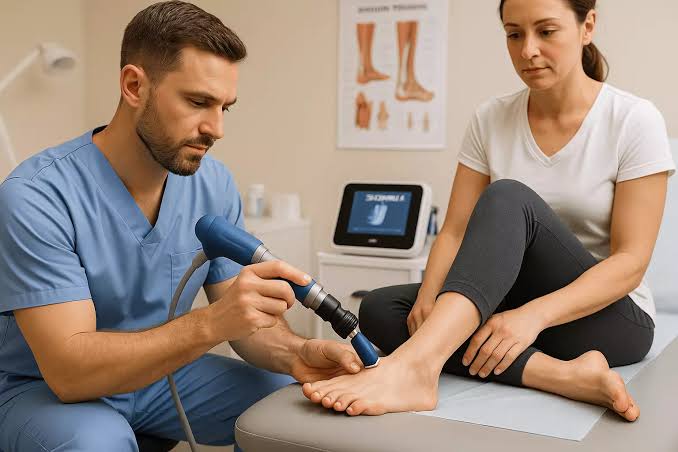
The plantar fascia is a thick band of tissue that connects the heel bone through the arch to the base of the toes. This tissue supports the arch and absorbs shock when you walk, run, or stand. Plantar fasciitis occurs when this tissue is irritated or has small tears, often from overuse. Some common contributing factors to developing plantar fasciitis include having tight calf muscles, high arches, flat feet, extra body weight, and long periods of standing on hard surfaces. Physical therapy exercises may help ease discomfort and improve foot mobility. Here’s more information on physical therapy exercises for supporting plantar fasciitis:
Calf and Leg Stretches
The Achilles tendon connects to the heel bone, and the plantar fascia attaches there as well. Because these structures are linked, tightness in the calf or hamstring can increase strain on the bottom of the foot. Stretching and working with a physical therapist helps reduce pain and inflammation from plantar fasciitis. Since tight lower-leg muscles can place extra tension on the plantar fascia, a calf and Achilles stretch targets the calf muscles and the Achilles tendon.
To perform this stretch, stand facing a wall with your hands placed at shoulder height. Step one foot back and keep that heel flat on the floor, then slowly bend your front knee. You should feel a stretch in the back calf. Hold the position for 20 to 30 seconds, then switch sides.
A seated straight-leg hamstring and calf stretch works the back of the entire leg. For this option, sit on the floor with one leg extended straight in front of you, and loop a towel or strap around the ball of your foot. Gently pull the towel toward you while keeping your knee straight to stretch along your hamstring and calf.
Foot and Tendon Stretches
Foot stretches help address stiffness in the arch and toes, so physical therapists may recommend focusing on these stretches. A seated toe stretch is a simple way to lengthen the plantar fascia. For this stretch, sit in a chair and cross one leg over the opposite knee. Hold the base of your toes and pull them gently back toward your shin; you should feel a stretch along the arch of your foot. Hold for 15 to 30 seconds before releasing.
Another stretching option is a massage foot roll stretch that uses a small, round object to apply pressure to the bottom of your foot. Place a tennis ball, lacrosse ball, or frozen water bottle on the floor beneath your foot arch. While seated, roll your foot slowly from the heel to the toes for one to two minutes to stretch the plantar fascia. The frozen bottle adds a cooling effect that some people find soothing.
Strengthening Exercises
Stretching addresses flexibility, while strengthening exercises build support in the muscles of the feet and legs. Stronger muscles help distribute pressure more evenly across the foot and plantar fascia. Stair stretches combine strength and flexibility work to benefit foot arches. For this exercise, stand on the edge of a step with your heels hanging off, but hold onto a railing for balance. Slowly lower your heels below the step, then rise onto your toes for about 10 to 15 repetitions.
Squats strengthen the calves, thighs, and ankle muscles, so they may be recommended for some people managing foot and ankle pain. Stand with your feet hip-width apart, and bend your knees and lower your hips as if sitting in a chair. Keep your heels on the floor throughout the movement. Standing from a chair is a functional exercise that mirrors everyday motion and is similar to a squat. To do this option, sit near the front edge of a sturdy chair with your feet flat. Push through your heels to stand up, then lower yourself back down with control.
Manage Plantar Fasciitis Pain
Physical therapy exercises are one part of managing plantar fasciitis effectively. A podiatrist can examine your feet, assess your gait, and identify factors that may contribute to your symptoms. Based on this evaluation, your podiatrist may recommend specific stretches or supportive orthotics to incorporate into your daily routine. If heel pain persists or affects your daily activities, schedule an appointment with a podiatrist to discuss a plan suited to your needs.