

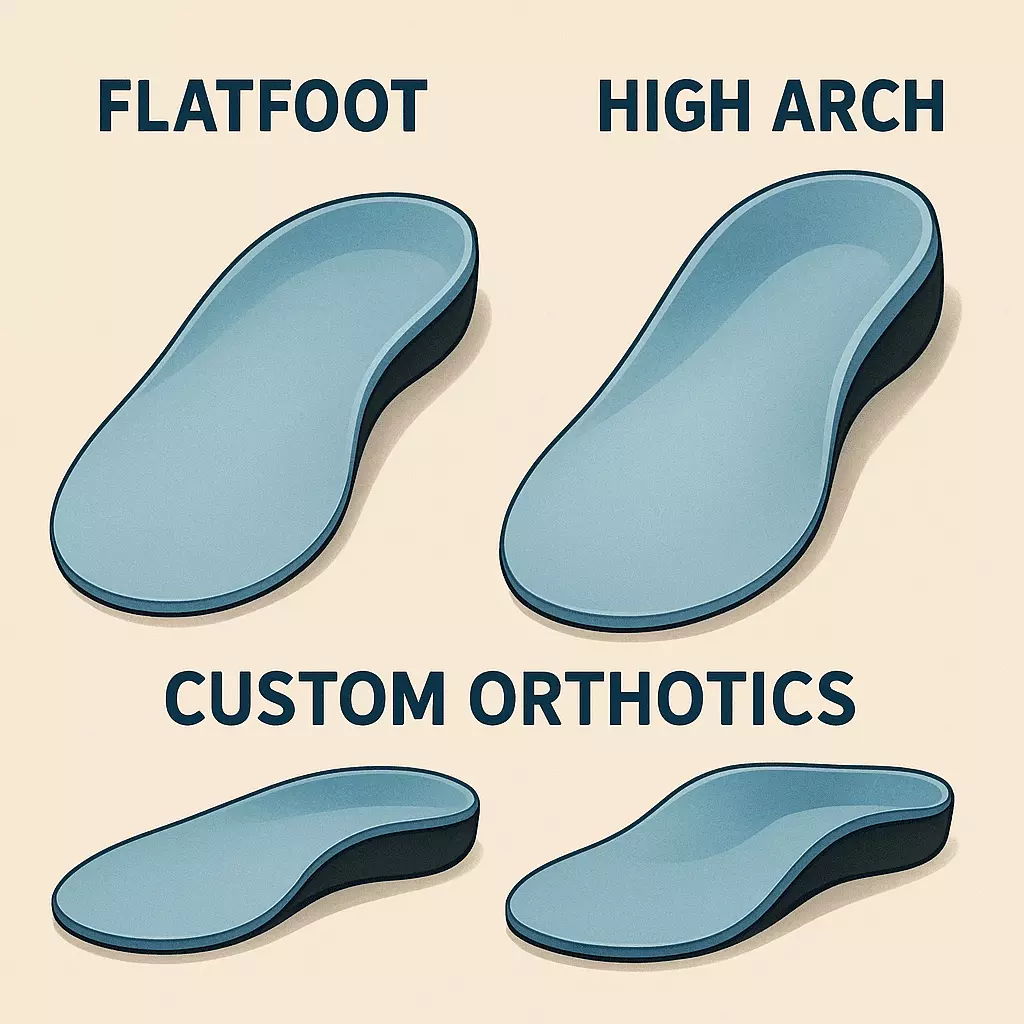
Orthotics support the arch and redistribute pressure across the foot, helping to manage the discomfort and misalignment associated with flat feet. These custom or over-the-counter inserts correct biomechanical imbalances, and they help reduce strain on joints and muscles. Because foot structure and daily activity levels vary by individual, a podiatrist can assess these factors and determine which type of orthotic suits a patient’s needs. Here is more information on what this condition is and how podiatrists manage it:
What Are Flat Feet?
Flat feet, also known as pes planus, occur when the arches of the feet collapse or fail to develop fully. This causes the entire sole to contact the ground when standing, which alters the foot’s natural alignment. Some individuals are born with flat feet, while others develop the condition over time because of factors such as injury, aging, or posterior tibial tendon dysfunction. The structural change affects how weight is distributed across the foot.
Symptoms vary from person to person and may include:
- Swelling along the inside of the ankle
- Fatigue or discomfort after prolonged standing
- Overpronation, where the foot rolls inward excessively during walking or running
How Are They Managed?
Podiatrists generally treat this condition with a combination of conservative treatments; these methods help reduce discomfort. Standard interventions include stretching exercises, supportive footwear, and activity modification. Physical therapy is also recommended to strengthen the muscles that support the arch, which can improve overall foot function. Orthotics are sometimes introduced alongside conservative treatments to address underlying structural issues. Unlike temporary fixes, orthotics work continuously inside the shoe to correct alignment during everyday movement, making them a practical long-term solution.
How Do Orthotics Work?
Orthotics support the arch and redistribute pressure evenly across the foot. When flat feet place excessive stress on areas such as the heel or ball of the foot, orthotics can reduce the load on these regions and alleviate the resulting strain. Custom orthotics are molded to an individual’s foot shape, and this precise fit provides more targeted correction than generic insoles.
Over-the-counter orthotics may provide mild relief for less severe cases, but they rarely address each patient’s specific biomechanical needs. Custom devices account for the degree of arch collapse, gait pattern, and any compensatory movements that the body has developed over time. A podiatrist measures these factors through gait analysis. They design an orthotic that targets the patient’s specific imbalance so the correction is accurate and effective.
How Is Professional Guidance Beneficial?
Seeking guidance from a podiatrist allows for an accurate diagnosis of the type and severity of flat feet present. Without this assessment, patients may choose orthotics that don’t address their specific condition, and discomfort worsens as a result. A podiatrist can also identify related conditions that require treatment alongside orthotic use, which enables a comprehensive approach to care.
Professional fittings account for differences in footwear, activity level, and lifestyle. A runner’s orthotic needs differ from those of someone who stands for long shifts at work, so a podiatrist tailors each device to the patient’s specific demands. Regular follow-up appointments allow adjustments as the foot changes over time; this is especially valuable for growing children or patients recovering from injury.
Learn More About Orthotics
Flat feet affect each patient differently, so personalized assessment is central to effective management. Orthotics address the root cause by supporting the arch and correcting pressure distribution across the foot. With professional guidance, this approach can reduce pain and improve mobility. If you have flat feet, schedule a consultation with a podiatrist to determine whether orthotics are right for you.