

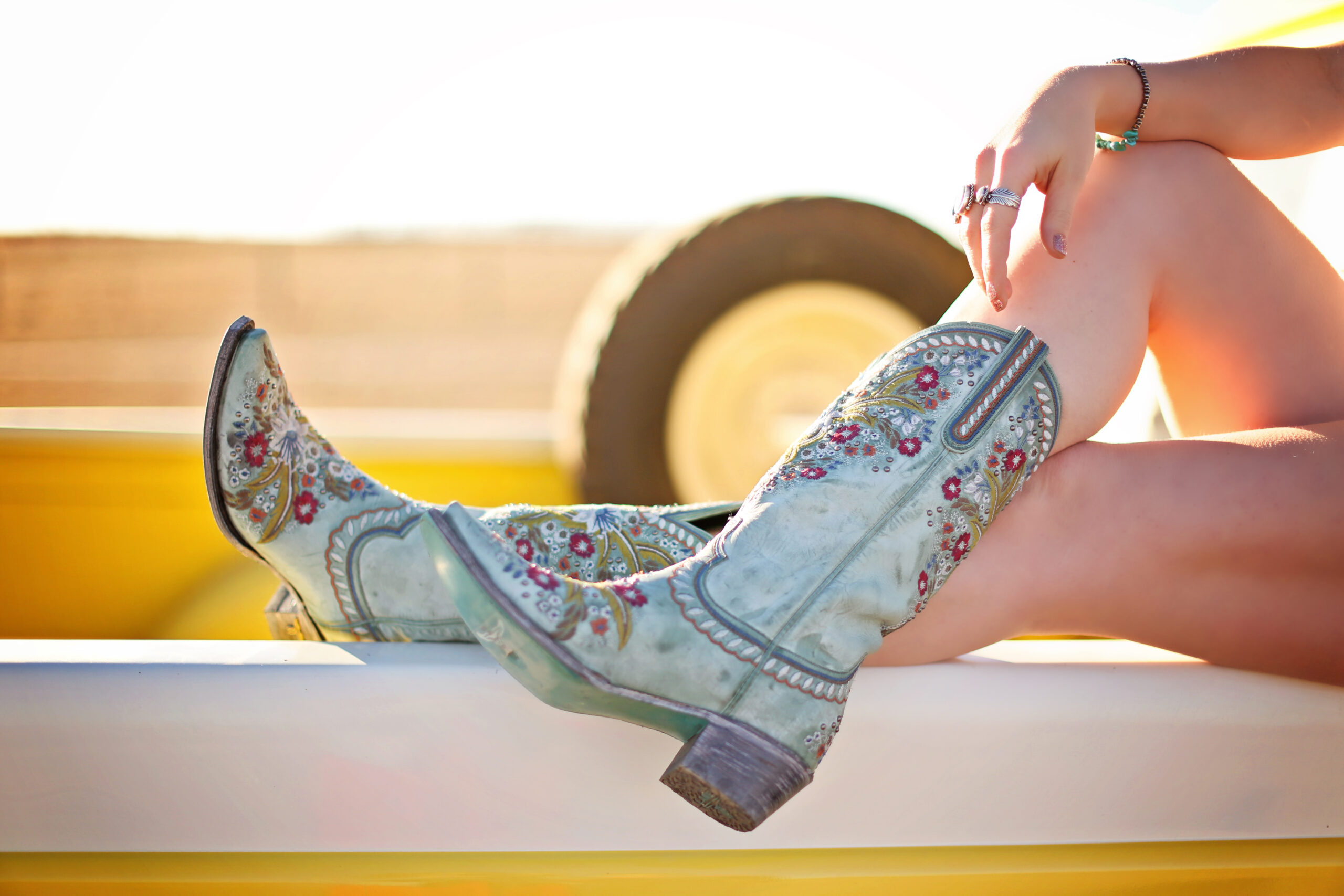
A western boot is designed for ranch work, horse riding, and daily casual or formal wear. Different boots are made from varying leather types derived from reptiles or mammals. Here is more information on the characteristics of Western boots:
Tall Leather Shafts
Western boots have tall uppers that extend above the ankle and often reach partway up the calf. Some people prefer shorter styles based on comfort, fit, or personal preference. The uppers are commonly made from leather and are shaped to provide structure while allowing movement at the ankle. Decorative stitching is often added to the upper sections, creating the distinctive patterns associated with many Western boot designs.
Angled Riding Heels
Western boots typically feature a raised heel attached beneath the sole. Bootmakers often build the heel by stacking multiple layers of material and securing them to the bottom of the boot. The heel slopes downward from the back toward the front, creating the distinctive profile commonly associated with Western footwear.
The angled heel is one of the defining characteristics of the Western boot and contributes to its recognizable silhouette. Its shape differs from the flatter heels found on many other types of footwear, giving the boot a distinct look and feel when worn. The heel is designed as a separate component from the sole and is carefully shaped during production to achieve a consistent appearance. A durable heel cap is commonly attached to the bottom surface to help protect the heel and provide traction during everyday wear.
Sturdy Leather Outsoles
Leather outsoles form the bottom layer of many traditional Western boots. These outsoles are typically cut and shaped from leather before being attached to the rest of the boot during assembly. Positioned beneath the foot, the outsole serves as the primary point of contact with the ground and plays a key role in the boot’s overall structure. The outsole is commonly secured to the upper and insole through a stitched construction method, creating a visible seam around the edge of the boot. The bottom surface gradually develops signs of wear from regular use, which alters its appearance and texture. Because the outsole is a separate component, it can often be replaced or repaired as part of the boot’s ongoing maintenance.
Distinct Toe Profiles
Toe shape is one of the features that distinguishes different Western boot styles. The design of the toe box influences the overall appearance of the boot and can affect how much space is available at the front of the foot. Manufacturers produce Western boots in a variety of toe profiles, allowing wearers to choose a style that matches their preferences for fit and aesthetics.
Some toe shapes feature smooth, rounded curves that create a traditional look; others narrow toward the front for a more tapered appearance. Additional designs incorporate angular lines or squared-off fronts, giving the boot a more contemporary silhouette. Each profile contributes to the character of the boot. Common Western boot toe shapes include:
- Round toes
- Narrow or pointed toes
- Cutter toes
- Square toes
Premium Leather Linings
Leather linings form the interior layer of many Western boots. Positioned beneath the outer leather, the lining creates a finished surface inside the boot and covers the internal construction elements that are hidden from view. This additional layer contributes to the overall structure and appearance of the footwear. By covering interior seams and edges, it helps create a more uniform surface inside the boot. While the outer leather provides the boot’s visible shape and character, the lining serves as a separate interior component that completes the overall construction.
Learn More About Western Boots
Cowboy boots have no laces; the pull-on construction holds the foot in place. Manufacturers provide boots in a variety of colors, allowing buyers to match the product to their everyday attire. Contact a reputable footwear seller to learn more about their products.